
How Green Coffee Is Graded:
Defects, Scores, and What Really Matters
What Green Coffee Grading Really Is
Green coffee grading isn’t about elegance.
It’s about risk control.
Before coffee gets roasted, brewed, or talked about online, it gets checked. Grading exists to answer one question:
Is this coffee clean enough to work with?
Nothing more.
Grading reduces surprises. It doesn’t promise flavor.
Physical Grading:
Where Defects Enter the Picture
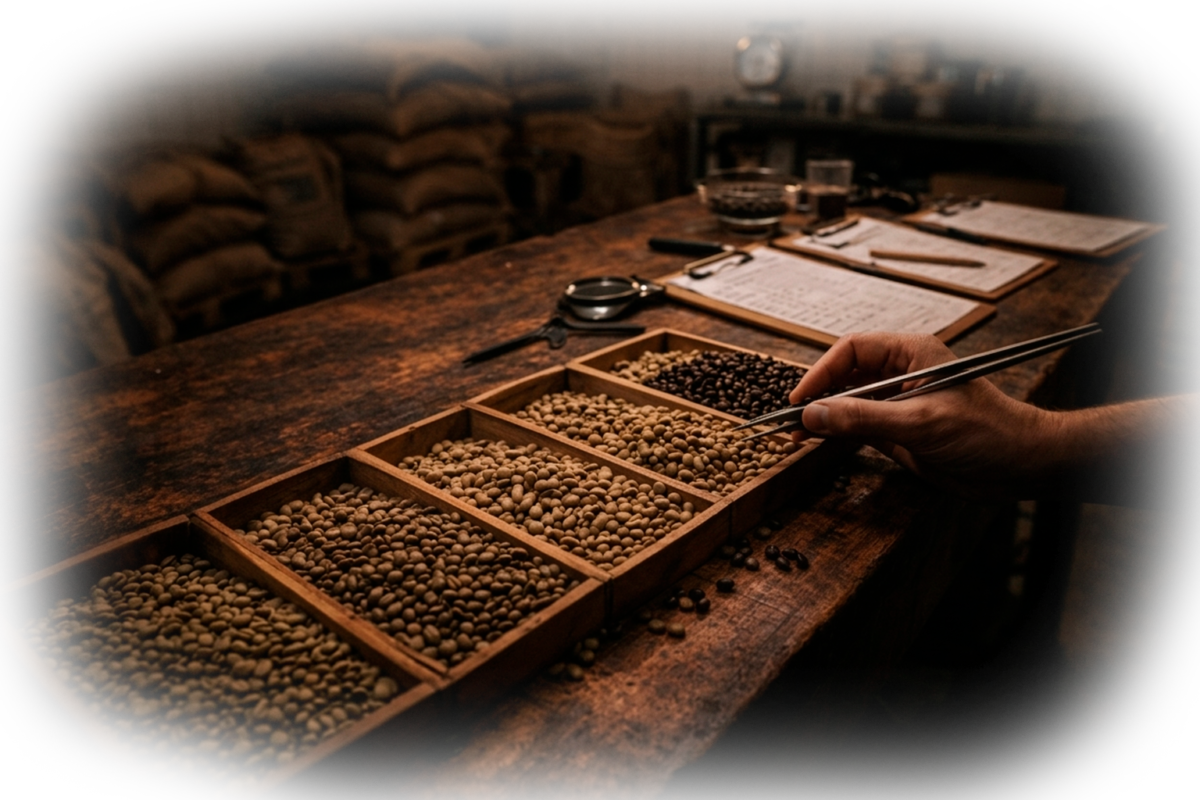
The first step is visual inspection.
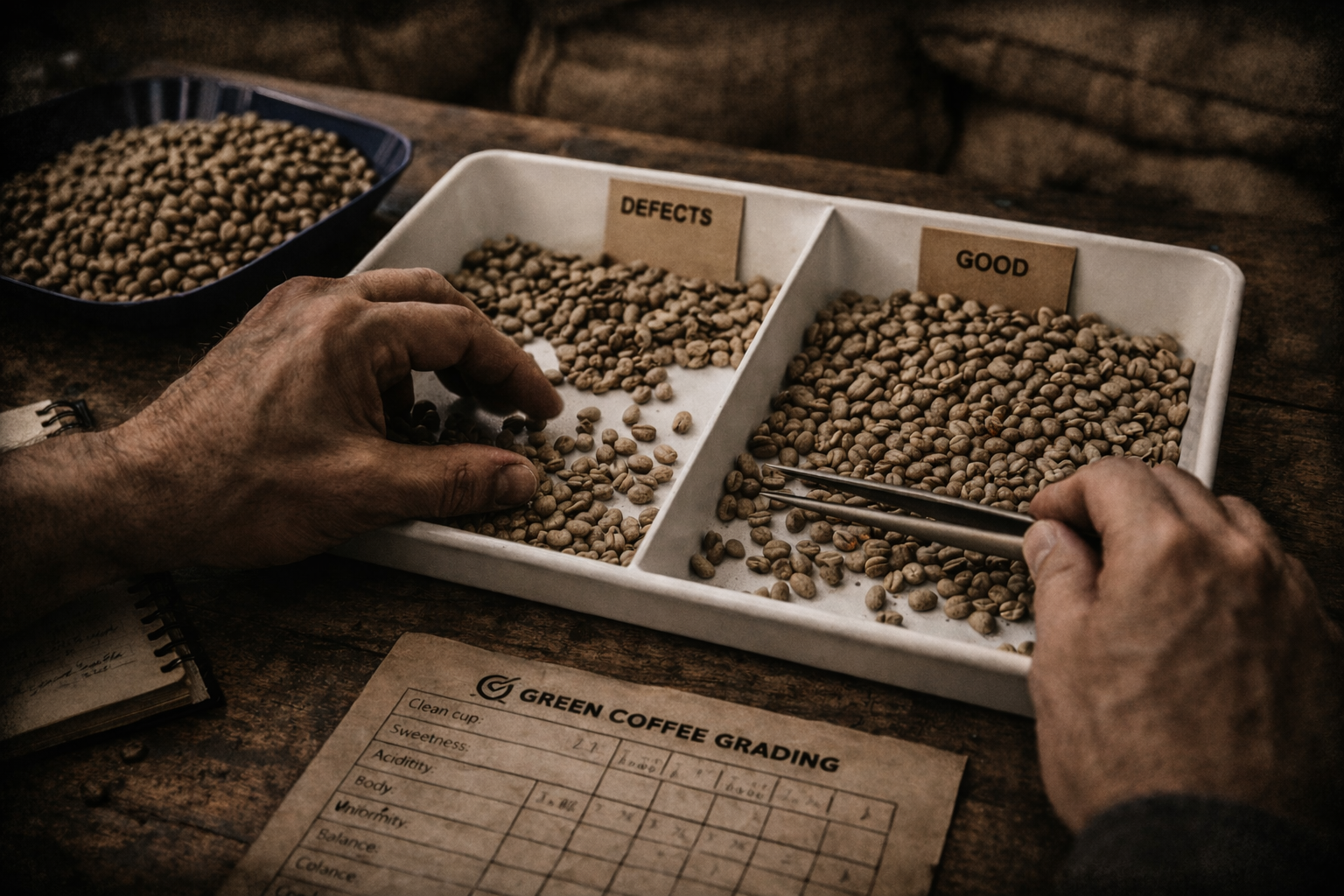
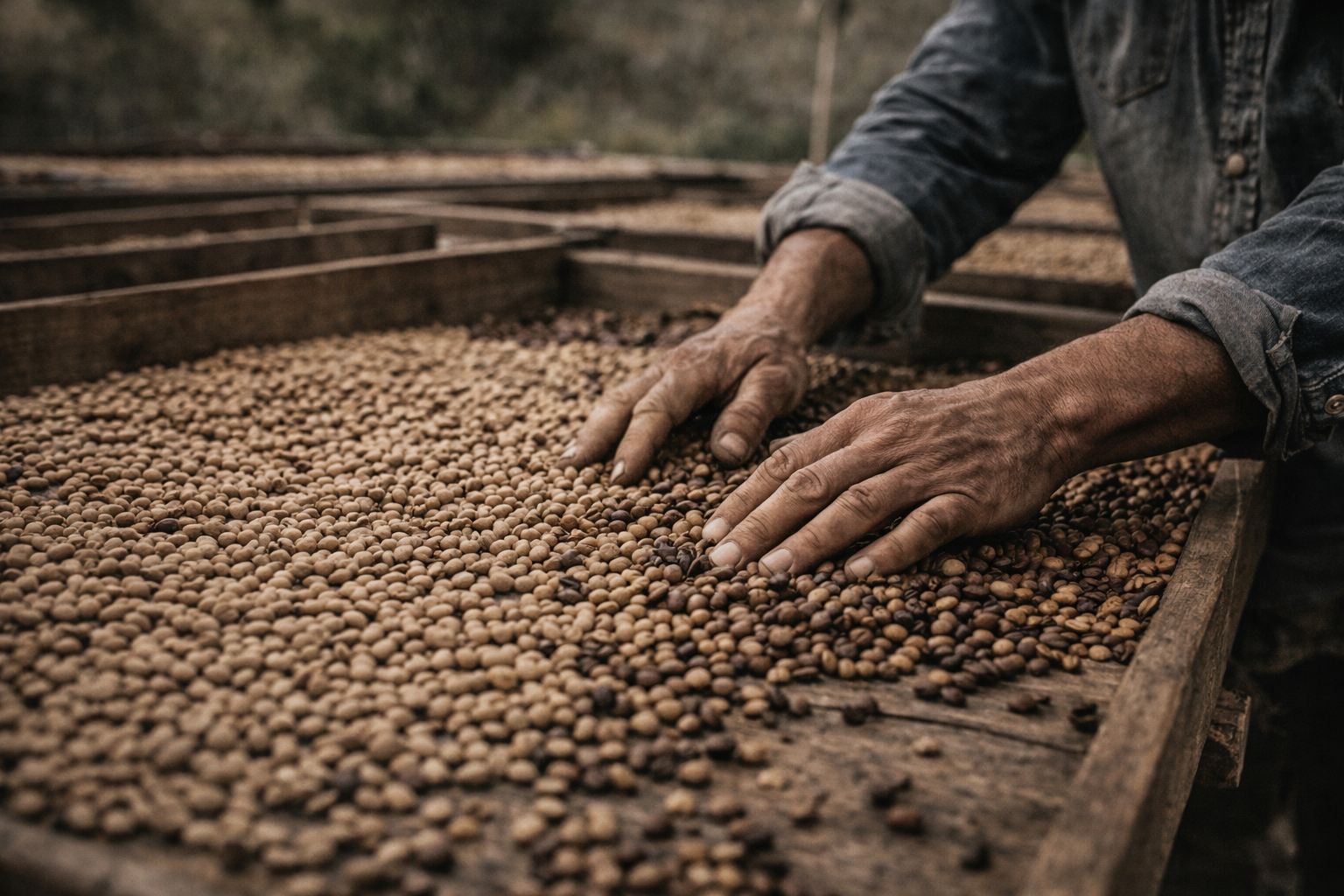
A 300-gram sample is sorted by hand. Every problem gets counted.
Primary Defects
(Deal Breakers)
These are serious. Some affect safety.
- Full black beans
- Full sour beans
- Moldy beans
- Foreign matter (stones, sticks, metal)
Even one moldy bean can compromise a batch.
Secondary Defects (Quality Drift)
Not dangerous. Still important.
- Broken or chipped beans
- Insect damage
- Partial black or sour
- Shells and husks
Too many of these don’t ruin coffee. They make it inconsistent.
Defect Allowances
by Grade
| GRADE | DEFECT TOLERANCE |
| SPECIALTY | 0 primary, very limited secondary |
| PREMIUM | Low secondary defects |
| COMMERCIAL | Higher tolerance |
| OFF-GRADE | Inconsistent, risky |
This is where specialty starts.
Not in flavor. In cleanliness.
Cup Scoring:
The Number Everyone Fixates On
After physical grading, coffee gets cupped.
Light roast. Standard protocol. Usually scored on a 100-point scale.
Protocols widely referenced by the Specialty Coffee Association define standardized cupping procedures and scoring frameworks used across the specialty coffee industry.
How Cup Scores Are Interpreted
80–84.99
Specialty
85–89.99
High-quality specialty
90+
Exceptional, rare
What Cup Scores Actually Reflect
A cup score depends on:
The taster's calibration
The roast profile
The comparison set
The day it was tasted
Research organizations like World Coffee Research continue exploring how genetics, environment, and post-harvest practices influence perceived coffee quality beyond simple numeric scoring.
It’s a snapshot, not a contract.
Scores guide buying. They don’t roast coffee for you.
Common Misunderstandings About Defects
This is where expectations break.
“Zero Defects Means Amazing Flavor”
No.
It means structural cleanliness.
Flavor comes from origin, variety, processing, and roast.
“One Defect Ruins Everything”
Also no.
A few broken beans won’t kill a cup.
Mold might.
Context matters.
What Really Matters for Home Roasters
Home roasters don’t need perfect coffee.
They need workable coffee.
What to Prioritize When Buying
- Zero primary defects
- Honest defect disclosure
- Consistency across the lot
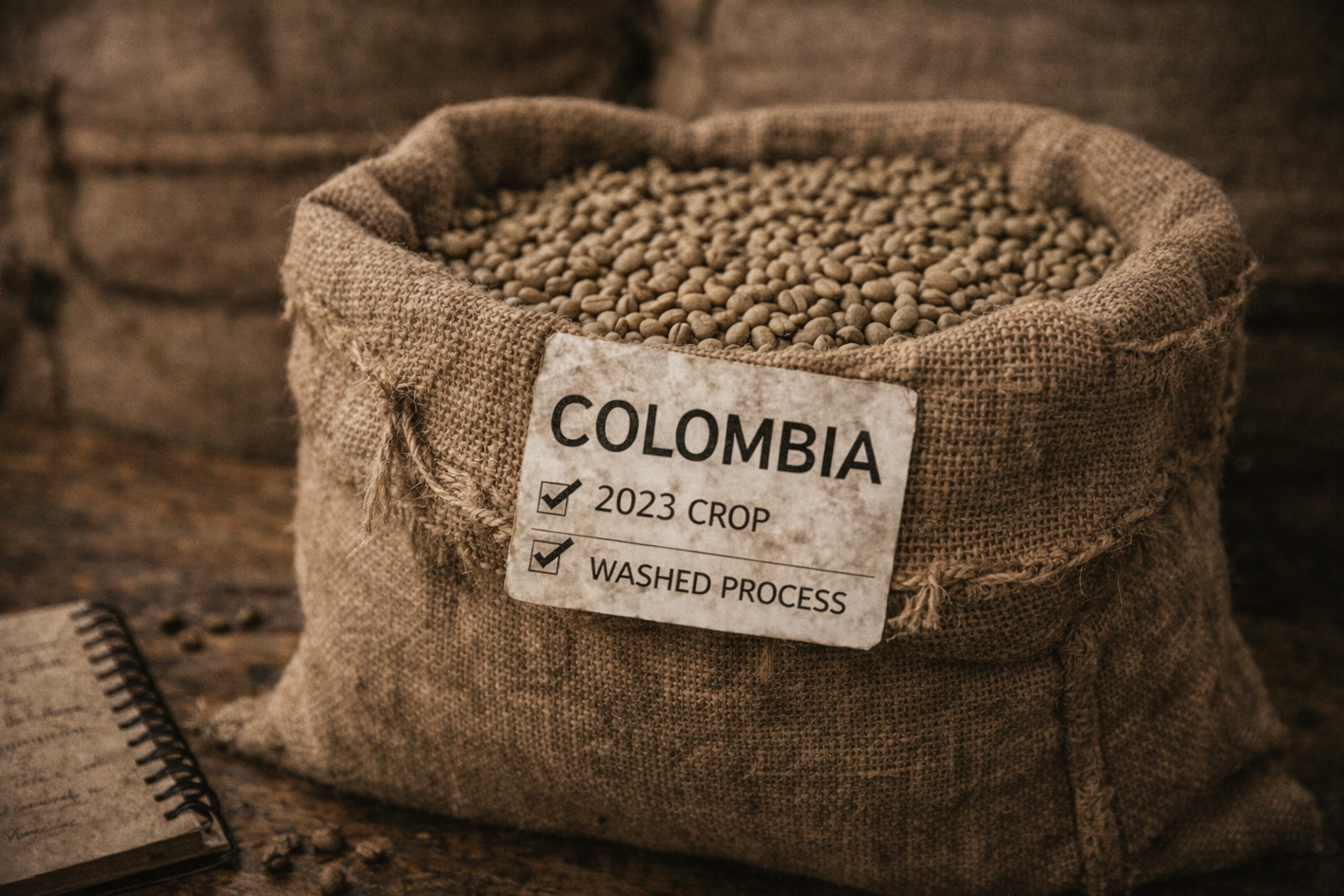
- Clear crop year and process
Ignore exaggerated flavor descriptions. They don’t roast well.
Clean beats impressive every time.
Why Specialty Coffee
Is Not About Perfection
Specialty coffee isn’t flawless.
It’s coffee handled with care, from farm to export.
Grading protects effort.
It doesn’t replace judgment.
FAQ - Green Coffee Grading
Grading is a tool.
Not a trophy.
Understand it. Use it calmly.
Then trust your roast.
Buy clean green coffee and let your roasting do the talking.