
How to Analyze a Coffee Roast Curve:
Reading RoR, Diagnosing Problems, and Adjusting Your Roast
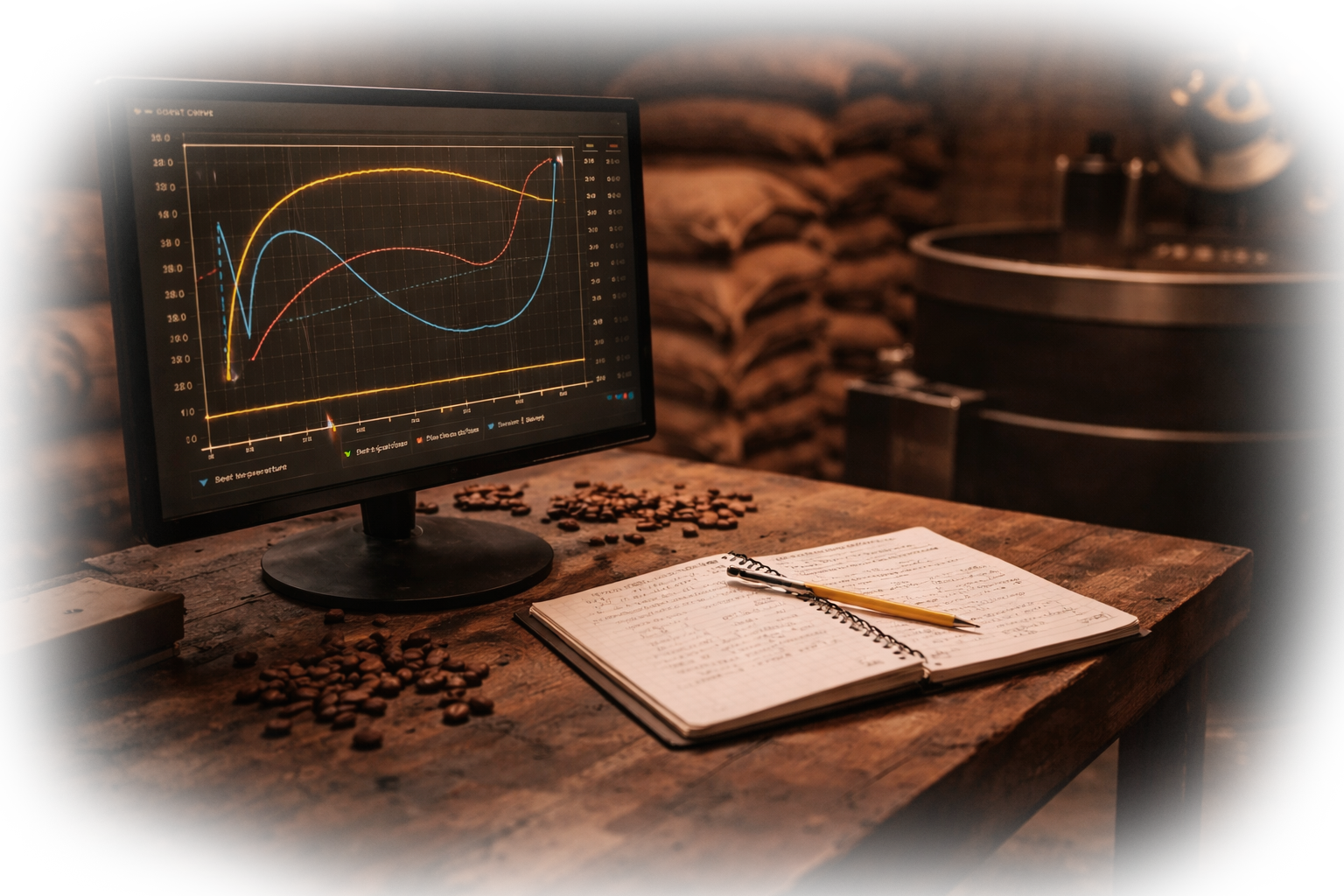
A Roast Curve Is a Report Card for Your Roast
Every roast leaves a trail.
Not smoke. Not aroma. A curve.
That line on your screen is just a record of how heat moved through the beans. Nothing mysterious about it.
When you learn to read it calmly, the curve starts telling you three things:
• how the roast behaved
• where things went sideways
• what to change next time
Most of that story lives in Rate of Rise, the shape of the curve, and how development finishes.
Let’s walk through it without turning it into rocket science.
Start with the Shape of the Roast Curve
Before zooming into numbers, step back.
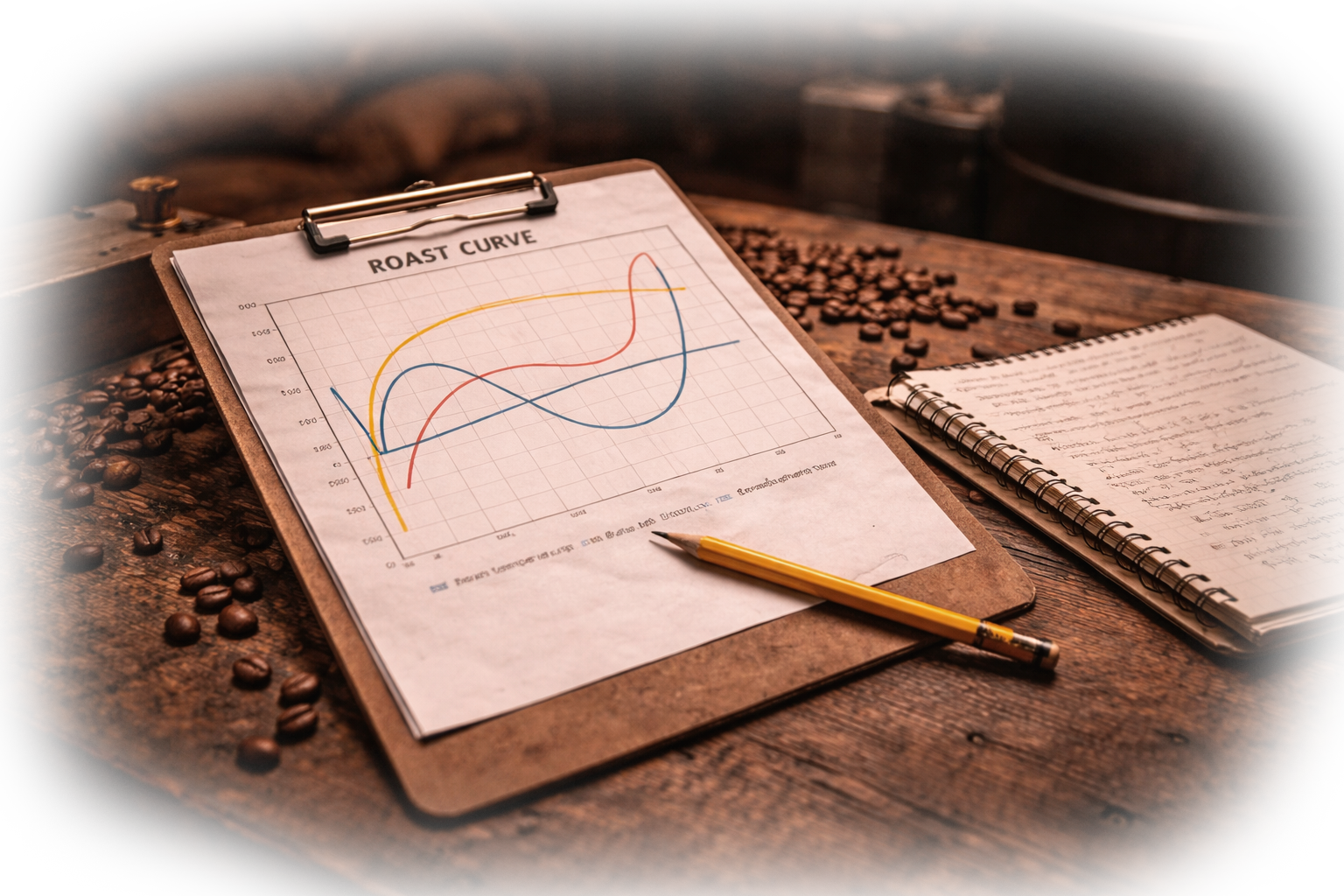
Look at the whole curve.
Good roasts usually look smooth and controlled.
No chaos. No violent swings.
A typical healthy curve will show:
• a clear turning point
• steady temperature rise
• gradually declining Rate of Rise
• controlled finish after first crack
If the curve looks calm, the roast usually behaved calmly too.
When the curve looks nervous… the cup often reflects it.
Reading Rate of Rise (RoR)
RoR is the heartbeat of a roast curve.
It shows how quickly bean temperature is climbing at any moment.
You can think of it as the speed of heat moving into the coffee.
A well-managed roast usually shows a gradual downward slope in RoR.
Not dropping suddenly.
Just easing down as the roast progresses.
Typical Healthy RoR Pattern
| ROAST STAGE | RoR BEHAVIOR |
| Early roast | Higher RoR as beans absorb heat |
| Mid roast | RoR begins declining |
| First crack | RoR controlled, not crashing |
| Development | Gentle decline toward drop |
When that rhythm holds steady, roasts tend to taste balanced.
Diagnosing Common Roast Curve Problems
This is where roast curves become useful.
They help explain why something tasted the way it did.
Let’s look at a few patterns that show up often.
RoR Crash
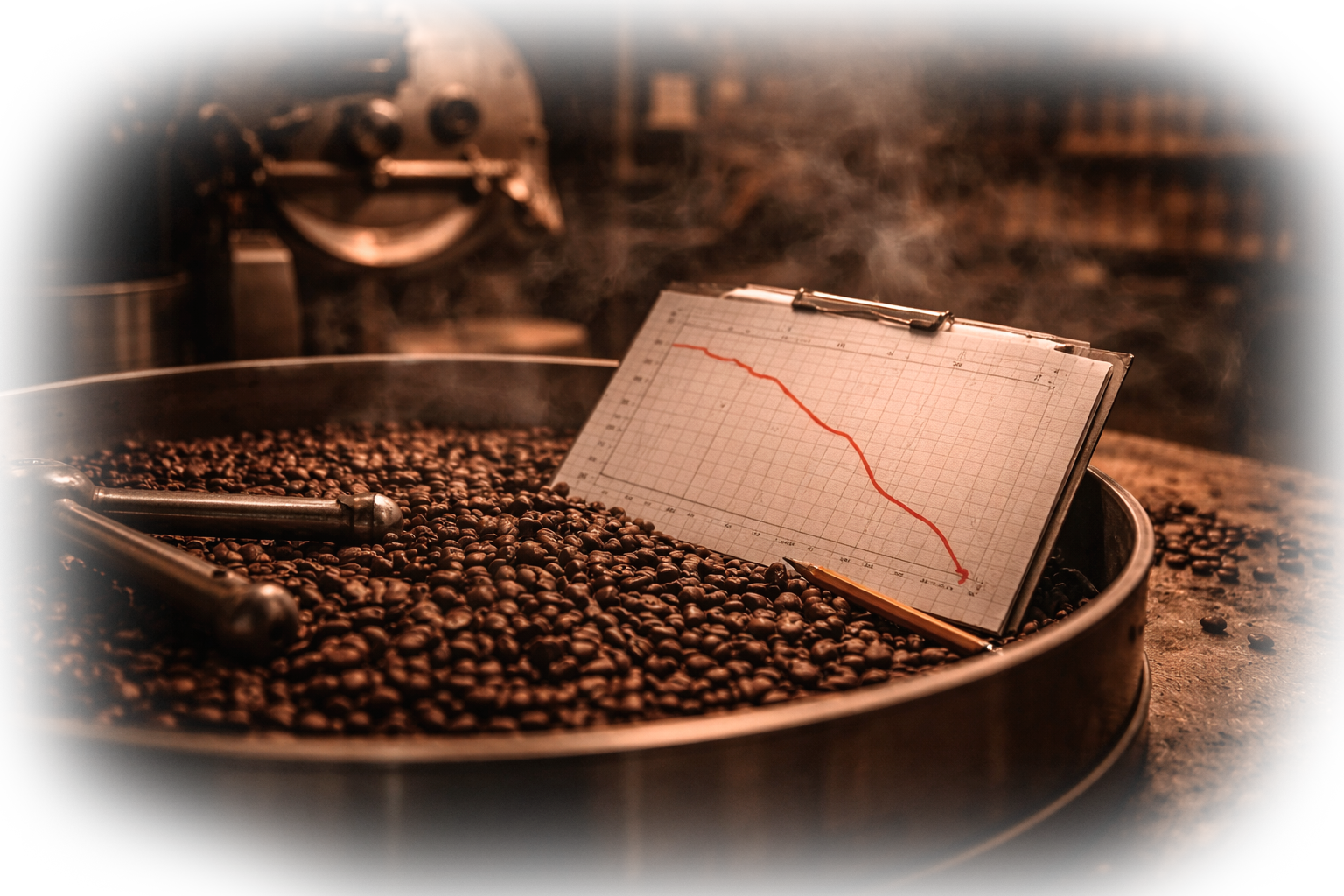
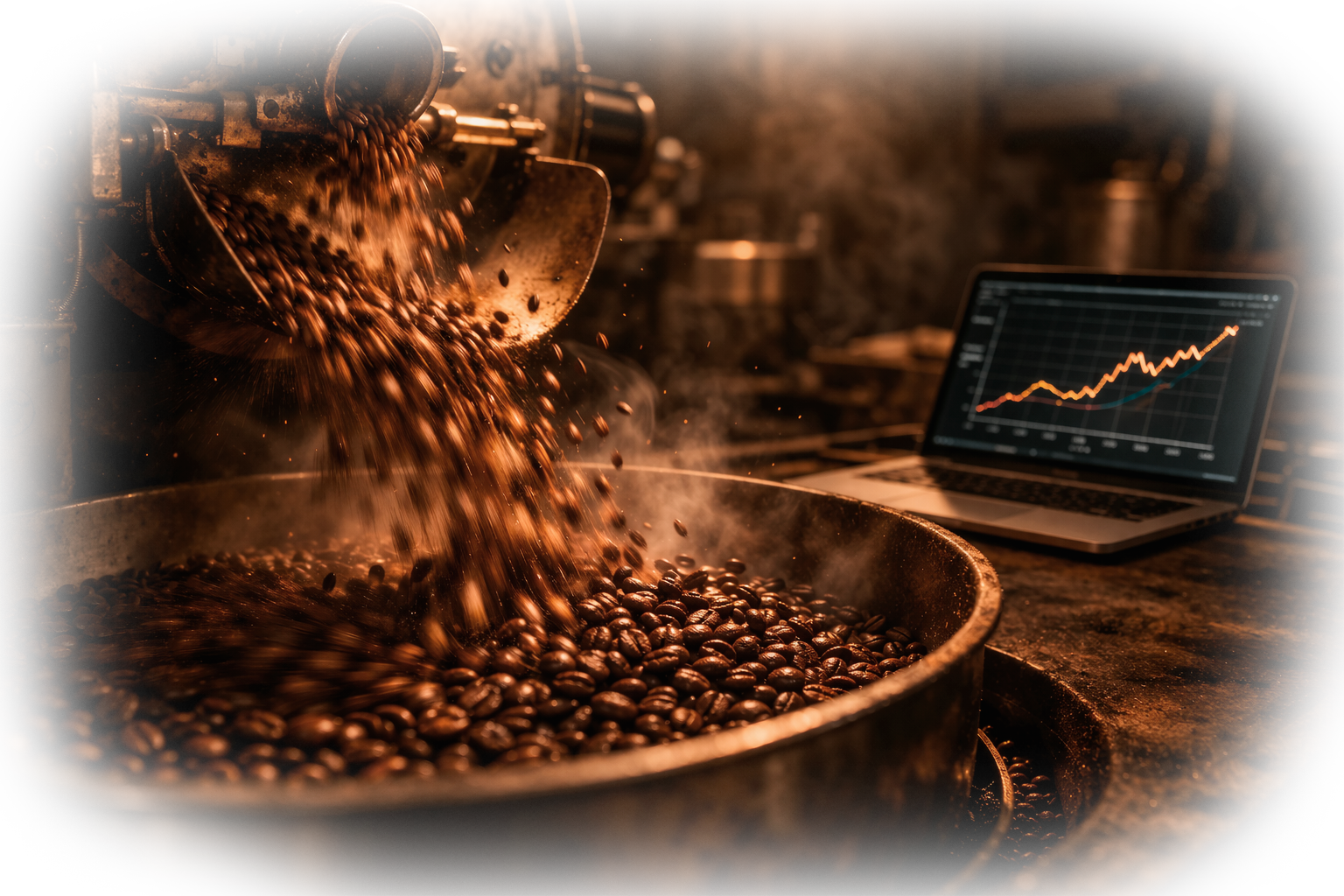
An RoR crash happens when the Rate of Rise drops suddenly, often around first crack.
What it can mean:
• heat was reduced too aggressively
• airflow pulled energy out of the drum
• the roast stalled
What the cup might show:
• dull sweetness
• muted acidity
• baked or flat flavors
RoR Flick
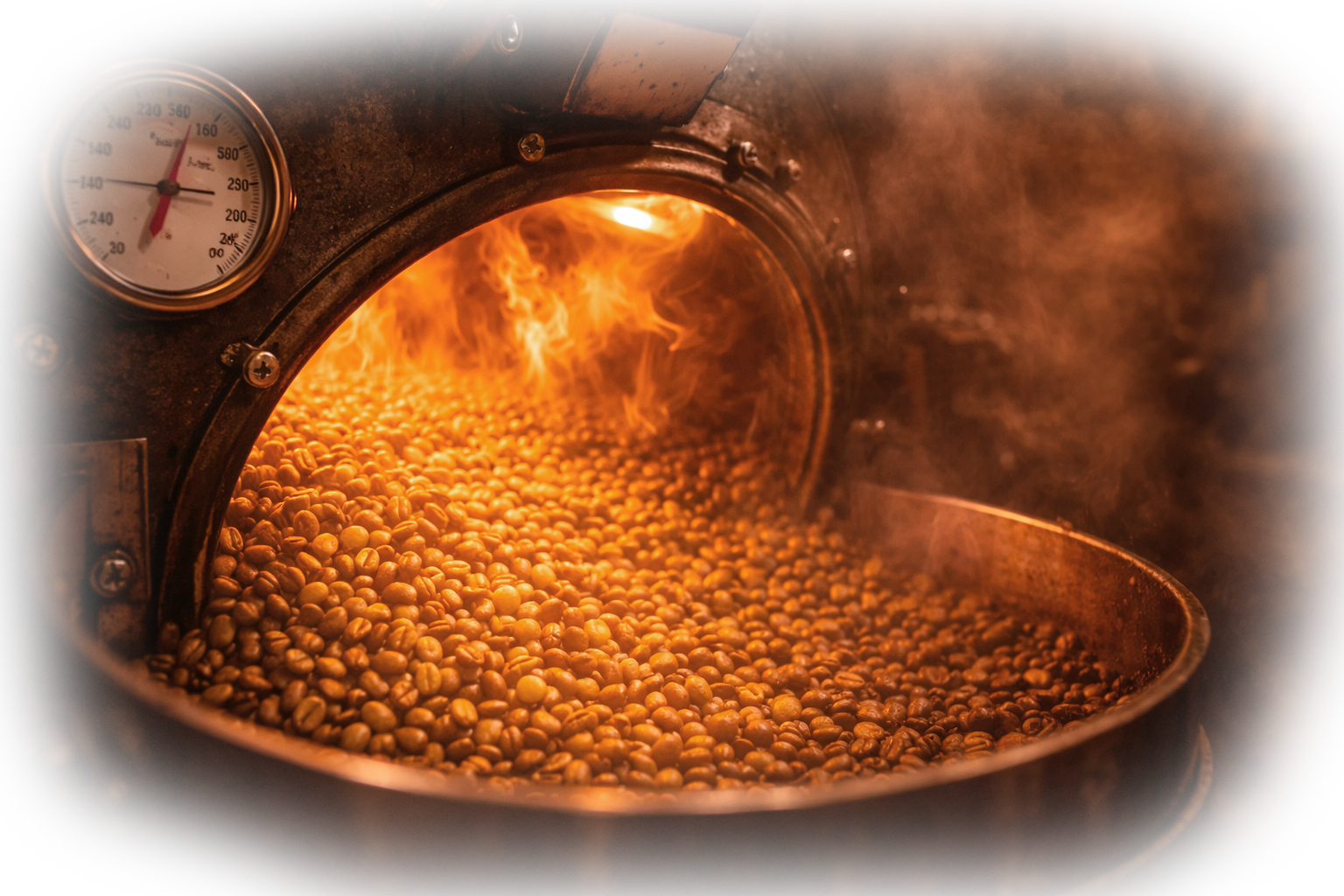
A flick happens when RoR jumps upward near the end of the roast.
This often happens when heat is reintroduced too late.
Possible causes:
• late burner increase
• overcompensating for a slowing roast
• unstable heat management
What the cup might show:
• sharp finish
• uneven sweetness
• slightly harsh edges
Overly Aggressive Early Heat
Sometimes the curve rises too fast in the beginning.
The beans absorb too much heat too quickly.
Possible signs:
• very steep early curve
• high initial RoR spikes
Possible flavor results:
• scorched notes
• hollow middle
• lack of clarity
Quick Roast Curve Troubleshooting Guide
| CURVE BEHAVIOR | POSSIBLE CAUSE | TYPICAL CUP RESULT |
| RoR crash | Too little heat entering first crack | Flat sweetness |
| RoR flick | Late heat spike | Harsh finish |
| Steep early curve | Too much initial energy | Scorched flavors |
| Smooth declining RoR | Balanced heat management | Clean, balanced cup |
No curve tells the whole story alone.
But patterns like these show up again and again.
Adjusting Your Roast Based on the Curve
This is the part that actually matters.
Once you understand what happened, the next roast becomes a small correction.
Not a full reset.
If RoR Crashes
Try:
• maintaining slightly more heat before first crack
• reducing airflow changes during the transition
• avoiding aggressive burner drops
If RoR Flicks Late
Try:
• stabilizing heat earlier
• avoiding burner increases after first crack
• letting the roast coast smoothly into development
If the Roast Starts Too Fast
Try:
• lowering charge temperature slightly
• reducing early burner settings
• slowing the initial energy push
Small adjustments usually work better than dramatic changes.
Roasting is more steering than fixing.
If you’re dialing in a new Colombian coffee and want beans that respond cleanly to heat, that’s something we think about from the start.
Structure matters.
Good green coffee makes roast curves easier to manage.
One Quiet Habit Good Roasters Share
After roasting, they don’t just save the curve.
They taste the coffee.
Then they look back at the curve again.
That connection between graph and flavor is where real roasting intuition grows.
Over time, you start recognizing patterns.
And once that happens, the curve stops being technical.
It just becomes a conversation with the coffee.
FAQ –Schema Ready
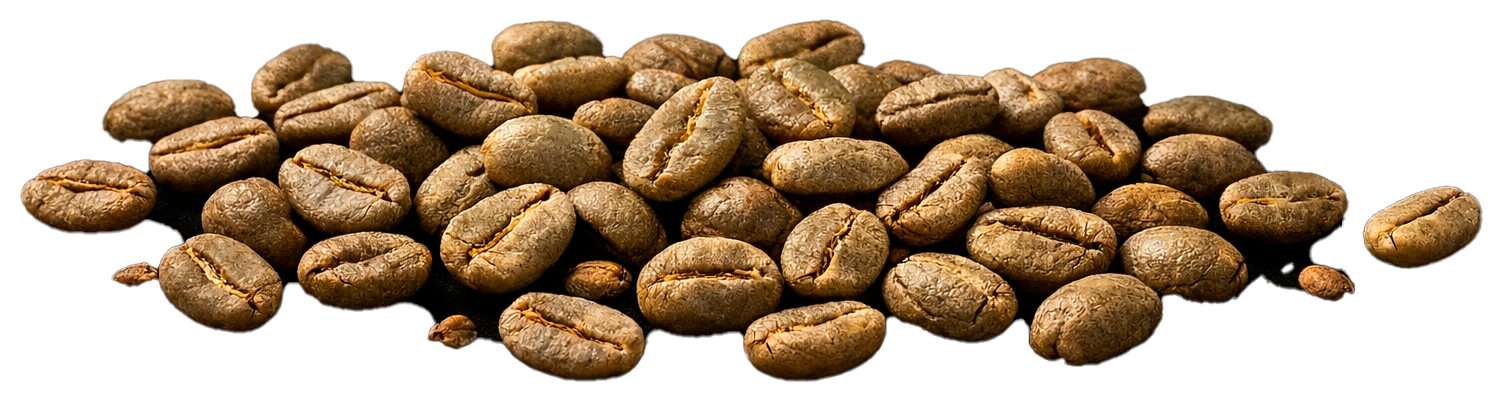
If you're roasting Colombian coffee and want green lots that move cleanly through the curve, that's our lane.
Good density. Clean prep. Honest specs.
The kind of coffee that lets you focus on roasting… not fighting the beans.
When you’re ready, we’ll send samples. Quietly.