
How to Choose Green Coffee Beans for Home Roasting
Before You Roast, You Choose
Most roasting mistakes don’t start in the drum.
They start in the bag.
Choosing green coffee isn’t about chasing flavor notes.
It’s about understanding structure.
If you get that part right, roasting becomes refinement, not rescue.
Step 1
Start With Origin, But Don’t Stop There
Origin matters. But country alone isn’t enough. Look for:
• Country
• Region
• Elevation
• Farm or cooperative
• Variety
The more traceability, the more control you’ll have later.
If the listing just says “South America Blend,” that’s not transparency. That’s distance.
Read our breakdown on Where Green Coffee Comes From if you want to understand origin deeper.
Step 2
Understand Processing Before You Buy
| PROCESS | WHAT YOU'LL TASTE | ROASTING BEHAVIOR |
| Washed | Clean, bright, structured | Stable, predictable |
| Honey | Sweet, round, layered | Moderate attention required |
| Natural | Fruity, heavy body | Needs airflow and control |
If you’re new to home roasting, start with washed coffees.
They forgive mistakes.
Naturals don’t.
Step 3
Pay Attention to Elevation and Density
Elevation affects bean density. Higher altitude usually means:
• Slower cherry development
• Higher sugar concentration
• Denser beans
Denser beans can handle heat better.
For small home roasters, density matters because your machine has limits.
Low-density beans heat up fast.
Sometimes too fast.
If your roaster runs hot, choose high-altitude coffees.
Step 4
Check Freshness of the Crop
Green coffee ages.
Not dramatically like roasted coffee, but it changes.
Look for:
-
Harvest year
-
Crop cycle information
Ideally, buy coffee from the most recent harvest.
Older green coffee can flatten in flavor and lose vibrancy.
Step 5
Moisture Content and Water Activity
You won’t always see this listed.
But when you do, it matters.
Ideal moisture content:
10–12 percent.
Water activity:
Below 0.60 for stability.
If a supplier provides this data, they’re serious.
If not, ask.
Standards around moisture content and green coffee stability are widely referenced by the Specialty Coffee Association.
Step 6
Match the Coffee to Your Roasting Style
Be honest about your setup.
Small Air Roaster
-
Choose dense washed coffees.
-
Avoid extremely fruity naturals at first.
Drum Roaster(1kg and under)
-
You have more flexibility.
-
Honey and natural processes become manageable.
Beginner Level
-
Start with balanced Colombian washed coffees.
-
Build consistency before experimenting.
Explore our Colombian green coffee selection if you want beans that respond well to light and medium roasting.
Common Mistakes Home Roasters Make
-
Buying based only on cupping score.
Learn more at the Coffee Quality Institute Website -
Ignoring processing.
-
Ignoring density.
-
Trying experimental fermentation lots too early.
-
Roasting five new coffees at once.
Slow down.
Learn one coffee deeply before jumping to the next.
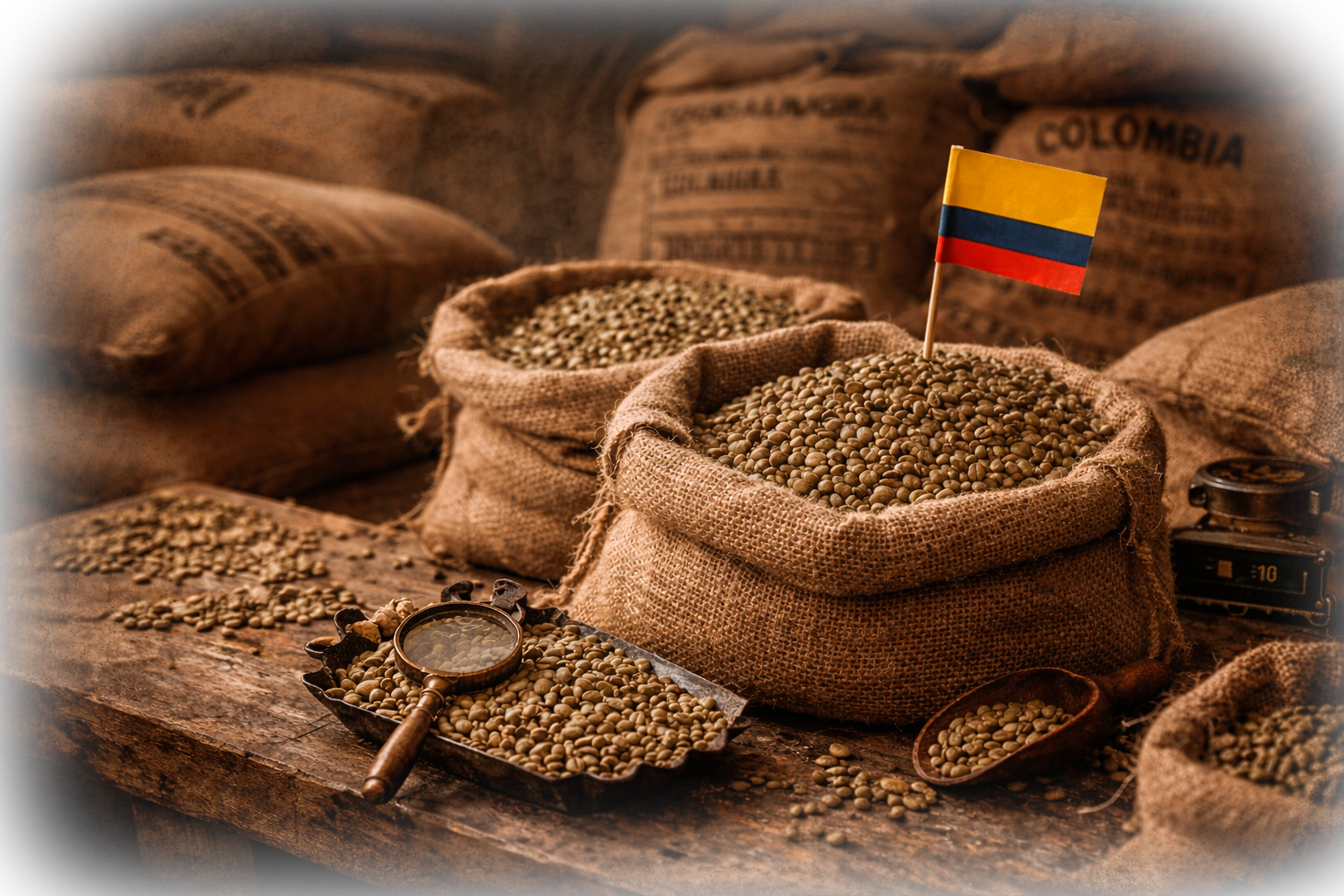
Why Colombian Green Coffee Is a Safe Starting Point
Colombia offers:
-
Reliable grading
-
Stable moisture
-
High-altitude density
-
Clean washed profiles
-
Wide regional diversity
For home roasters, that combination reduces unpredictability.
You’re learning roasting.
You don’t need chaos from the raw material.
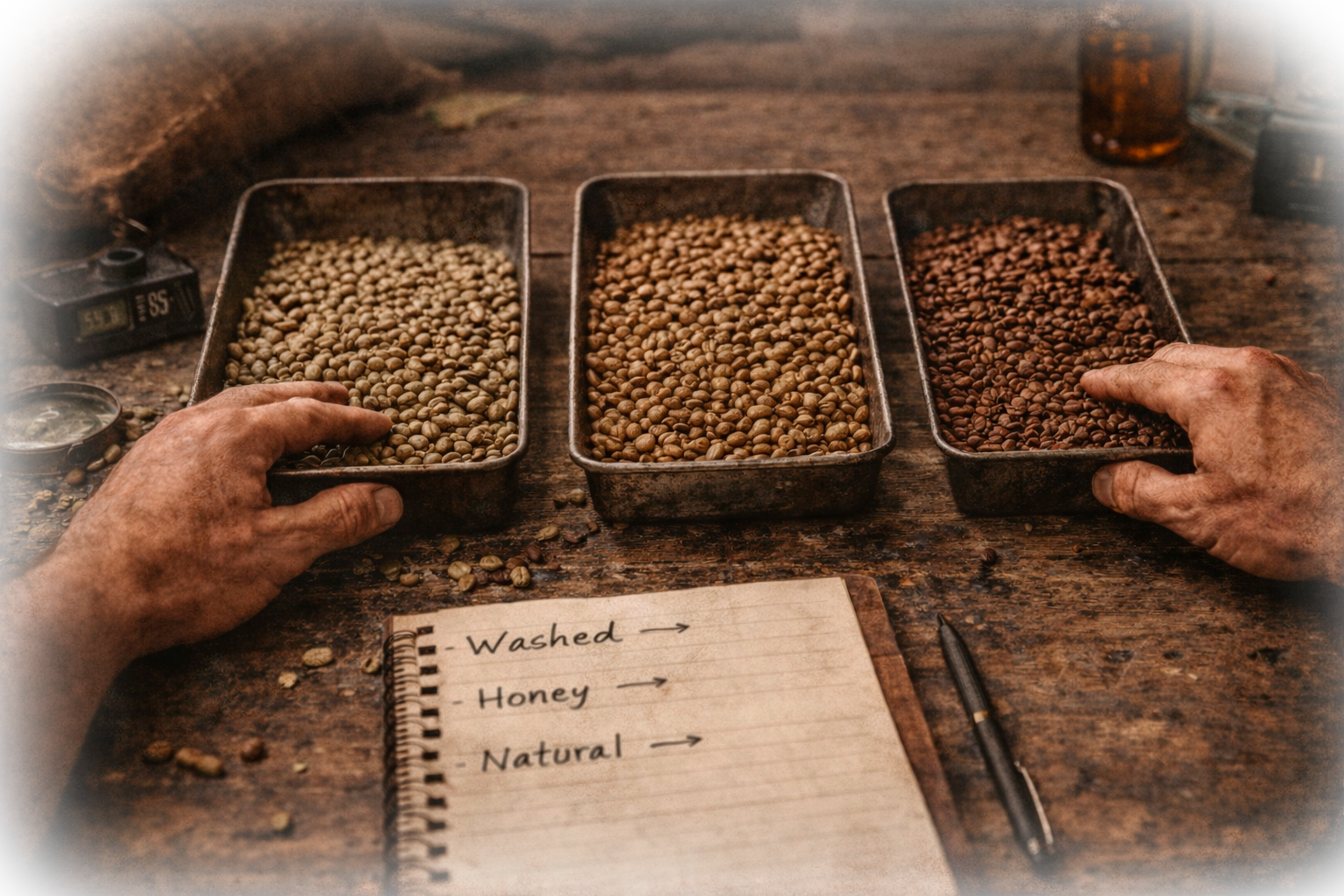
A Simple Decision Framework
Ask yourself three questions:
-
Do I want clarity or fruit intensity?
-
Is my roaster stable enough for complex naturals?
-
Am I experimenting, or building consistency?
If you want clarity → Washed.
If you want balance → Honey.
If you want expression → Natural.
Choose based on your ability, not your curiosity.
Curiosity can wait. Structure first.
FAQ – Choosing Green Coffee for Home Roasting
The Quiet Strategy
Choosing green coffee isn’t about finding something rare.
It’s about finding something structured.
When the raw material is clean, dense, and traceable, your roast curve makes sense.
And when your roast makes sense, your cup does too.
No shortcuts.
Choose green coffee like you plan to build something with it.
Not like you’re buying a souvenir.
Browse our green coffees by processing method and roast with clarity.