
How to Evaluate Green Coffee Before You Roast It:
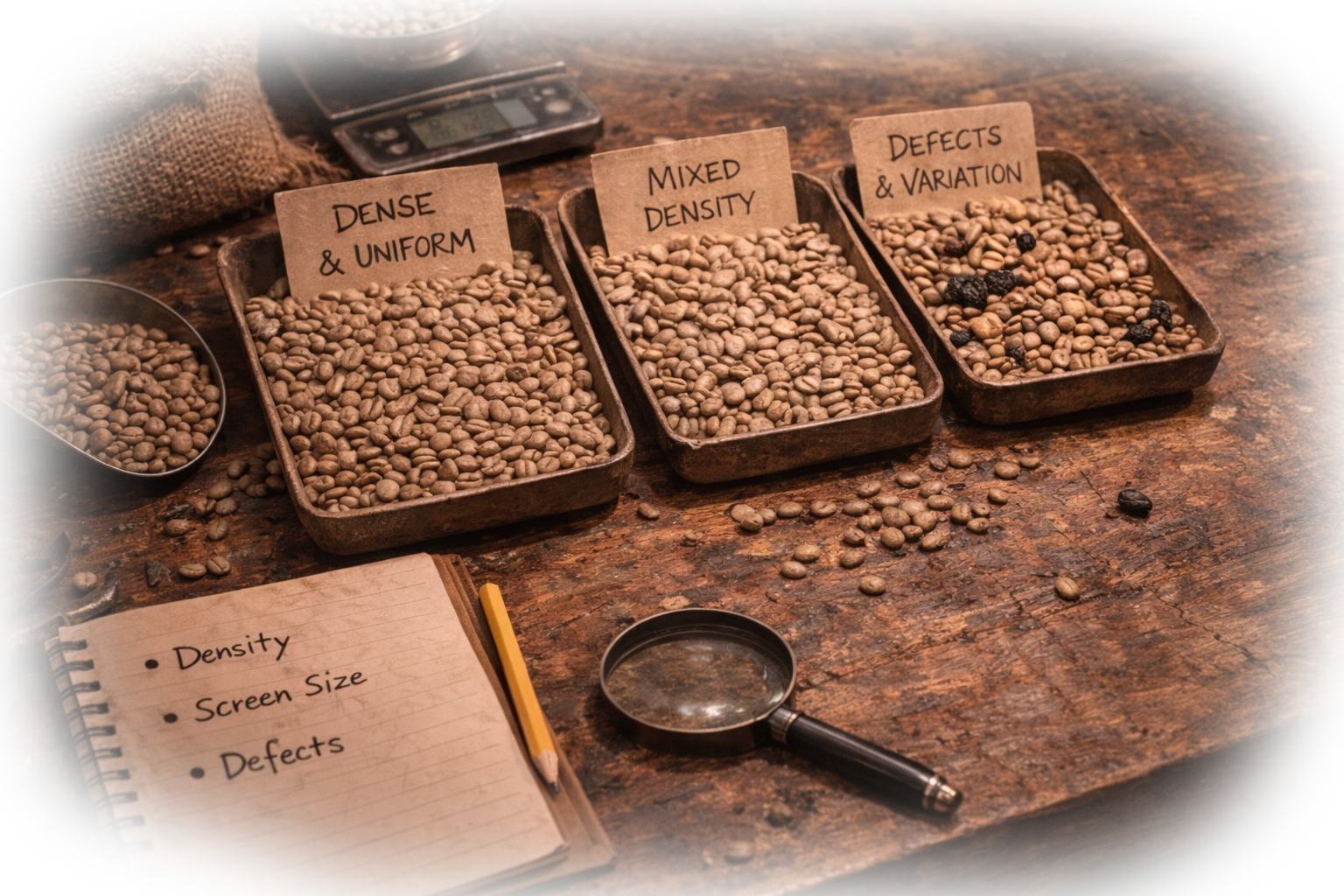
Density, Screen Size, and Defects
Green Coffee Tells You a Lot Before You Roast It
Before the drum turns.
Before the first crack.
Before any roasting curve gets drawn on a screen.
The coffee is already telling a story.
You just need to know where to look.
Most experienced buyers start with three quiet checkpoints:
-
Density
-
Screen size
-
Defects
Nothing fancy.
Just the basic signals that tell you if a coffee is solid… or if it’s going to fight you in the roaster.
Let’s walk through them.
First: Coffee Bean Density
Density is one of the simplest clues about how a coffee developed at origin.
In plain terms, dense beans are usually better structured beans.
They grew slower.
Usually at higher altitude.
Usually with cooler temperatures.
That slower development tends to pack more cellular structure inside the seed.
Which matters once heat hits it.
Why Density Matters in Roasting
Dense coffees typically:
-
handle heat more predictably
-
develop cleaner acidity
-
maintain structure during roasting
Lower density coffees often:
-
roast faster
-
lose structure earlier
-
show flatter flavor profiles
That doesn’t make them bad.
It just means the roasting approach changes.
Typical Density Signals
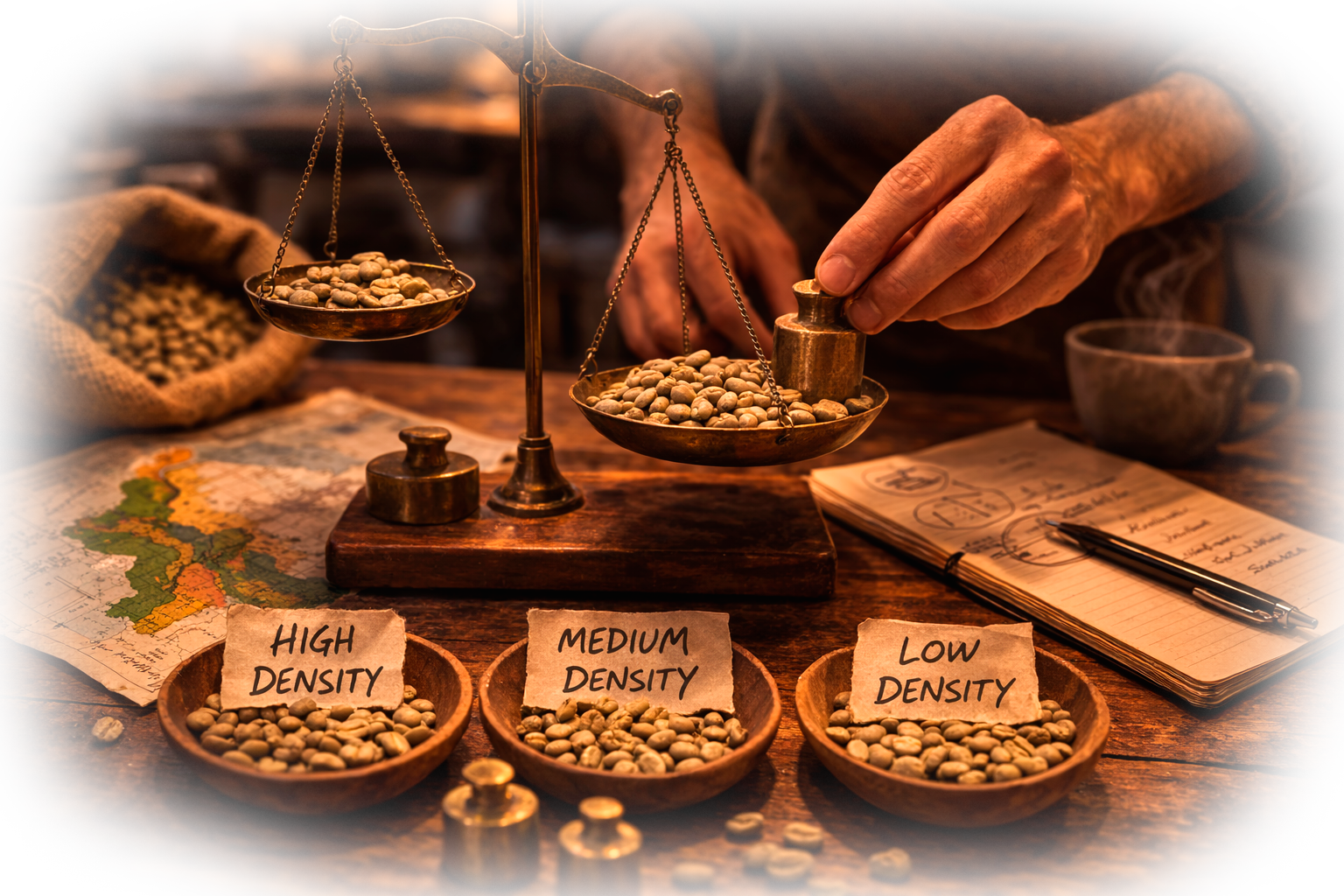
| DENSITY LEVEL | WHAT IT OFTEN INDICATES |
| High density | High altitude growth, slower maturation |
| Medium density | Balanced growing conditions |
| Low density | Lower altitude or faster maturation |
Good roasters adjust their heat strategy once they understand this.
Second: Screen Size
Screen size is simply the physical size of the green coffee bean.
Beans are sorted through screens with round holes measured in 1/64 of an inch.
For example:
Screen 18 = 18/64 inch
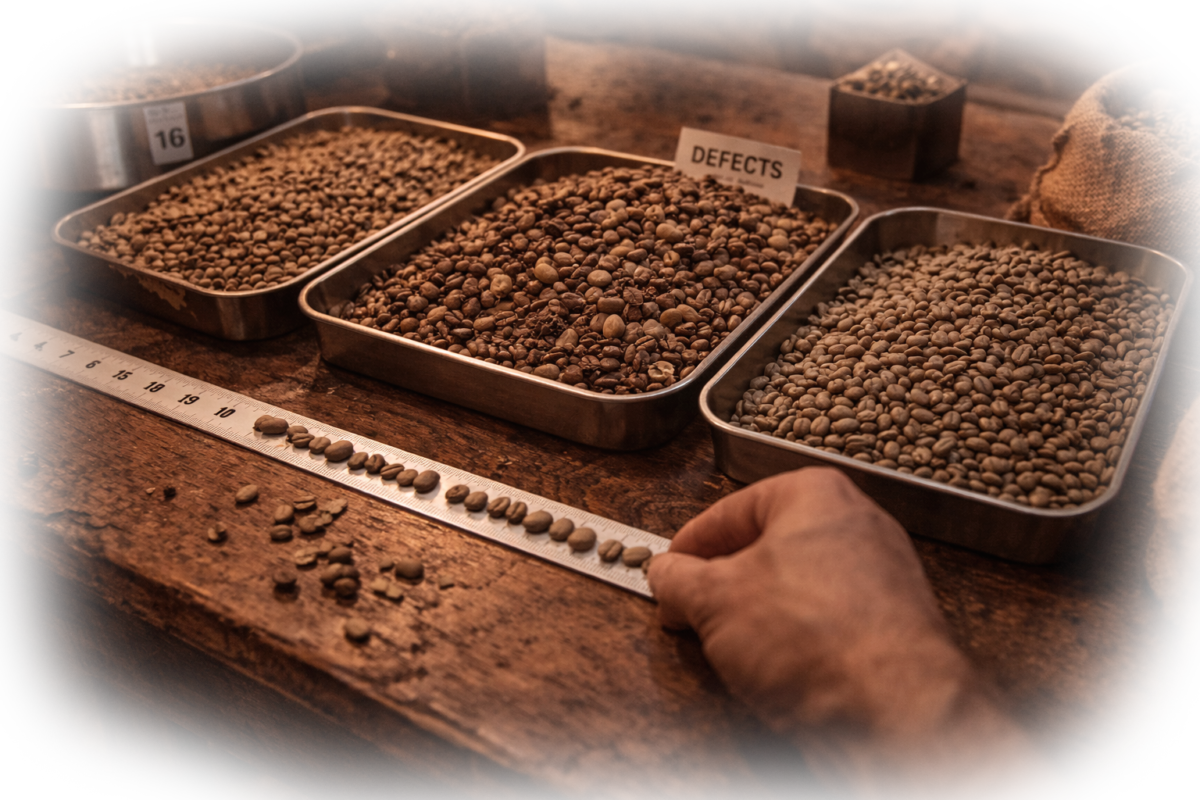
Screen 16 = 16/64 inch
Bigger number.
Bigger bean.
But here’s where people get confused.
Bigger Beans Do NOT Automatically Mean Better Coffee
Large beans can look impressive.
But quality comes from growing conditions, processing, and structure, not just size.
What screen size does help with is roasting consistency.
Uniform beans heat more evenly.
Mixed sizes can create uneven development.
Common Screen Size Categories
| SCREEN SIZE | GENERAL DESCRIPTION |
| 18+ | Very large beans |
| 16-17 | Standard specialty size |
| 14-15 | Smaller beans |
| <14 | Usually separated or downgraded |
Most specialty lots fall comfortably in the 16–17 range.
Third: Green Coffee Defects
This is where experienced buyers slow down.
Because defects tell you how the coffee was handled at origin.
Harvesting.
Processing.
Drying.
Storage.
All of it leaves fingerprints.
Primary Defects
These are the serious ones.
Examples include:
-
black beans
-
sour beans
-
mold damage
-
severe insect damage
Too many of these, and the coffee loses its specialty classification.
Secondary Defects
Less dramatic, but still important.
Examples include:
-
broken beans
-
partial insect damage
-
shell beans
-
quakers (after roasting)
These don’t always ruin a coffee.
But they affect consistency.
Quick Visual Guide to Defects
| TYPE | IMPACT ON QUALITY |
| Primary defects | Significant negative flavor impact |
| Secondary defects | Minor to moderate roasting inconsistency |
| Clean sample | Minimal visual defects |
Most professional evaluations involve examining a 350g sample under standardized grading rules.
But even a quick visual check can tell you a lot.
Why These Three Checks Matter Together
Looking at density alone isn’t enough.
Screen size alone doesn’t tell the whole story.
And defects without context can mislead you.
Good buyers combine all three signals.
Like this:
-
Dense beans + uniform screen size + clean sample
Usually a stable roasting coffee. -
Mixed density + wide screen variation + defects
Expect uneven roasting behavior.
This kind of quiet evaluation saves time later.
And saves money.
If you're sourcing Colombian green coffee and want samples with clear grading, transparent data, and honest evaluation, just reach out.
We’ll walk through it together.
No noise.
One Small Habit That Helps
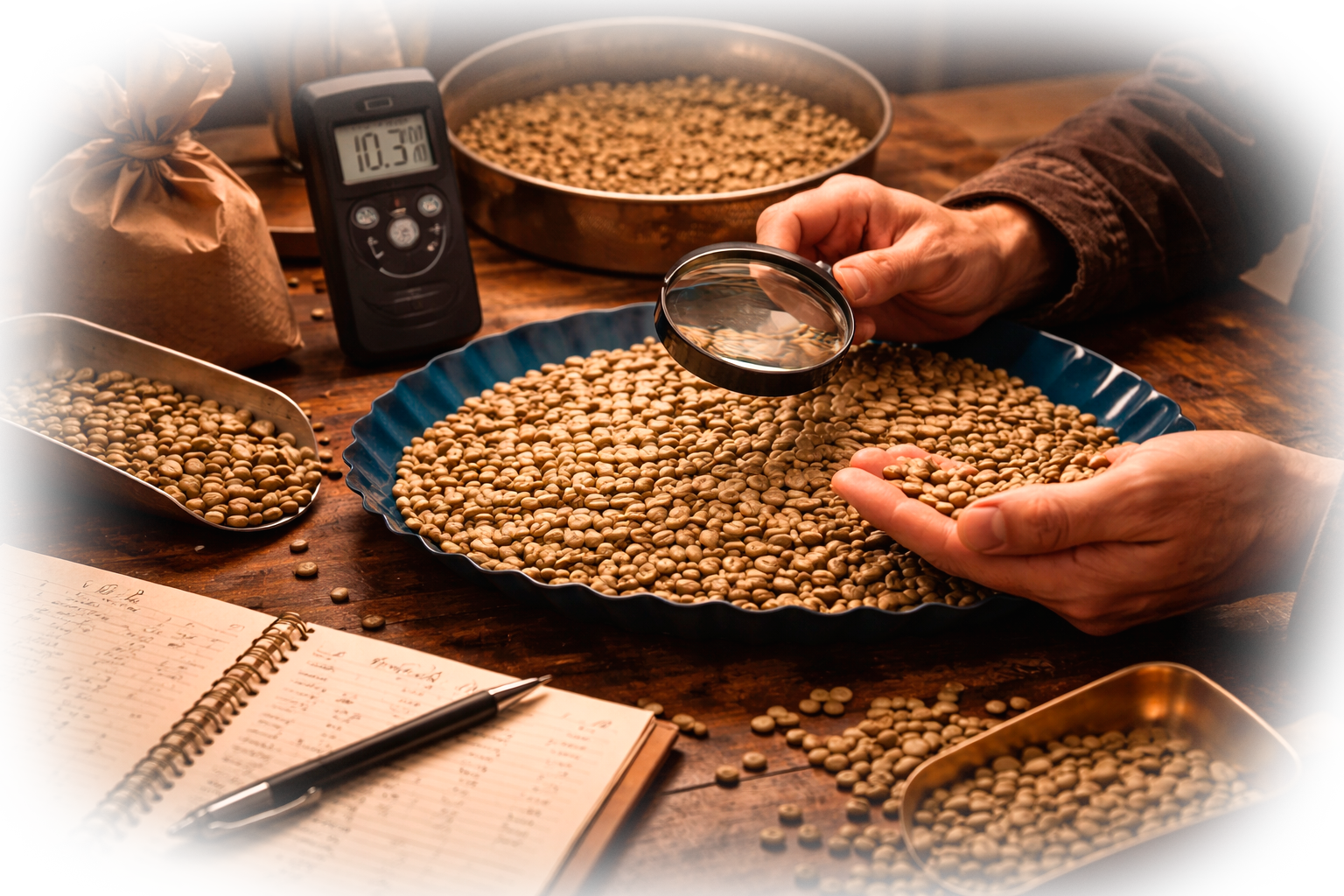
Before roasting a new coffee, take two minutes to spread a handful on the table.
Look at it.
Touch it.
Check size variation.
Look for defects.
It sounds simple.
But that small pause often tells you more than a spec sheet.
FAQ –Schema Ready
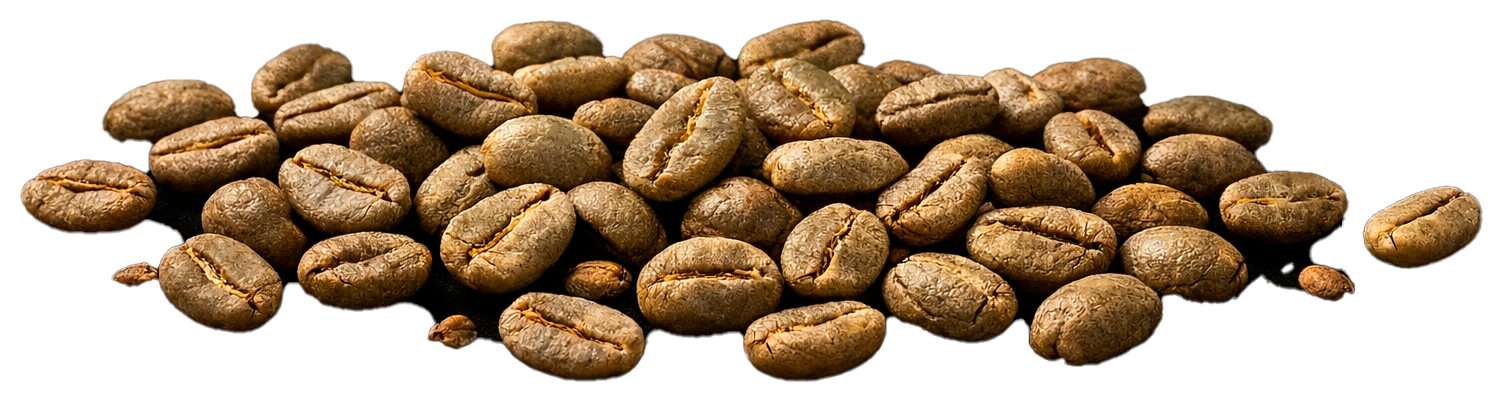
If you're looking for Colombian green coffee with clean grading, solid density, and honest specs, that's our lane.
Nothing fancy.
Just coffee that behaves well in the roaster and shows up in the cup.
When you're ready, we’ll send samples. Quietly.