
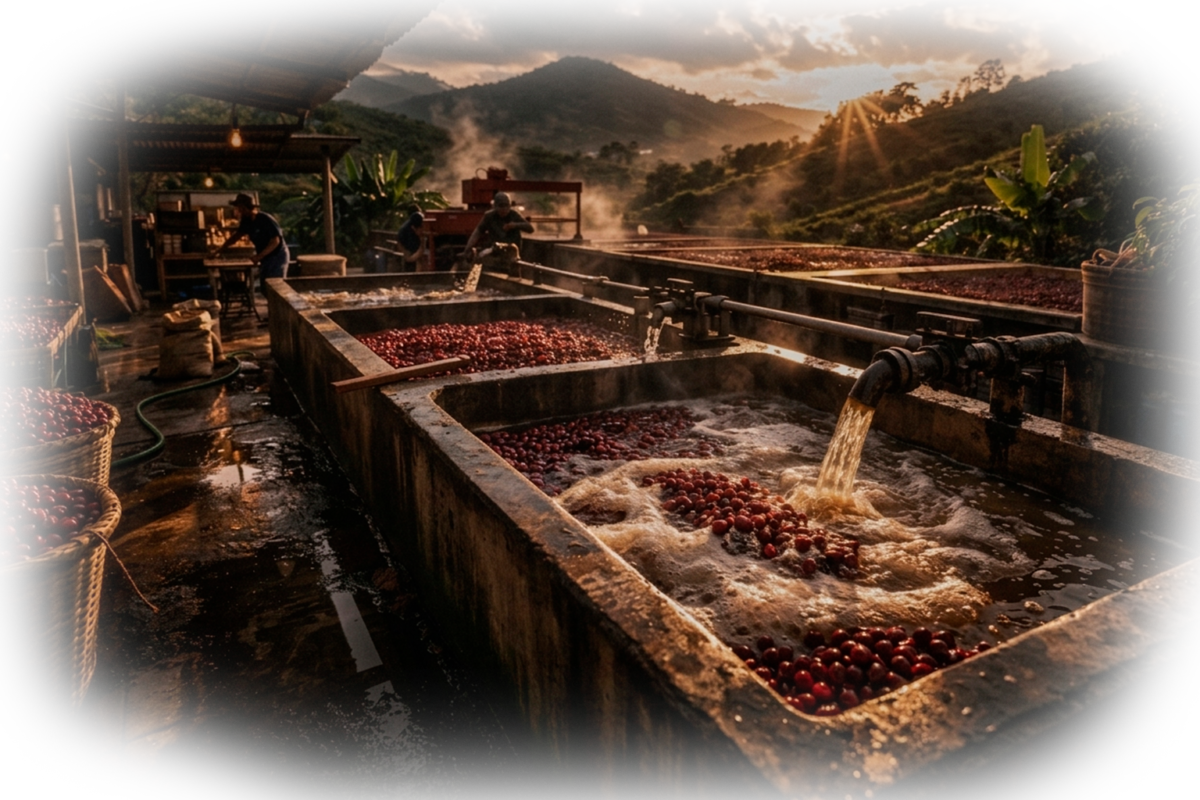
Washed Honey Natural Coffee Processing:
How Processing Changes Flavor
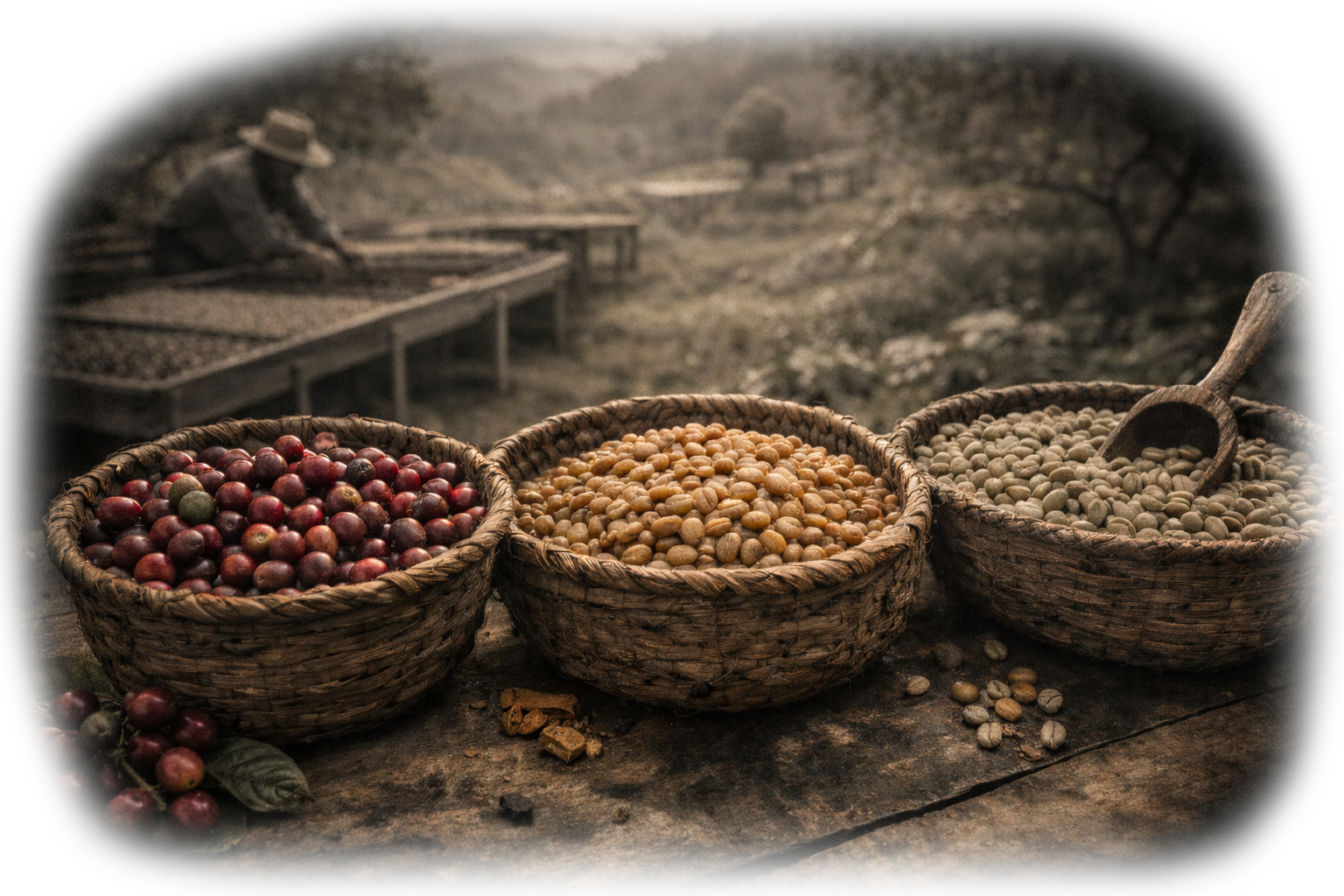
Processing Is Where Flavor Gets Decided
Before roasting. Before brewing. Before branding.
Processing is where the direction of flavor gets locked in.
Same farm. Same altitude. Same variety.
Different processing?
Completely different cup.
If you buy green coffee, this isn’t optional knowledge.
It’s basic survival.
If origin still feels unclear, read our guide on Where Green Coffee Comes From first.
What Coffee Processing Actually Means
Processing starts right after harvest.
Processing standards and terminology used across the specialty industry are widely referenced by the Specialty Coffee Association.
A coffee cherry has:
• Skin
• Pulp
• Mucilage
• Parchment
• Seed (the bean)
Processing determines how much of that fruit stays in contact with the seed while drying.
More fruit contact usually means more fruit character.
Less contact usually means cleaner structure.
That’s the framework.
Now let’s break it down.
Washed Process
(Wet Process)
Clean. Structured. Transparent.
How It Works
-
Cherry is depulped.
-
Mucilage is removed through fermentation.
-
Beans are washed clean.
-
Dried in parchment.
Very little fruit contact during drying.
What It Tastes Like
- Clear acidity
- Defined sweetness
- Crisp finish
- High clarity
You taste the origin. Not the fermentation.
How It Behaves in Roasting
-
Stable moisture levels
-
Predictable heat absorption
-
Clean development window
If you want control, washed coffee gives it to you.
Colombia built its reputation on this method.
Not by accident.
Honey Process
(Wet Process)
Middle ground. Not washed. Not natural. Intentional balance.
How It Works
-
Skin removed.
-
Mucilage left partially on the bean.
-
Dried with sticky layer intact.
No washing step to fully remove fruit sugars.
What It Tastes Like
-
More body than washed
-
Rounded acidity
-
Caramelized sweetness
-
Soft fruit tones
Less sharp than washed.
Less wild than natural.
How It Behaves in Roasting
-
Slightly higher risk of uneven drying
-
Can caramelize faster
-
Needs attention in early Maillard
Honey rewards precision.
It punishes autopilot.
Natural Process
(Wet Process)
Fruit stays on. All of it. Big personality.
How It Works
-
Whole cherry dried intact.
-
Fruit ferments around the seed.
-
Dried before being hulled.
Maximum fruit contact.
What It Tastes Like
-
Heavy body
-
Intense fruit notes
-
Berry, wine-like tones
-
Sometimes fermented character
When done well, it’s expressive.
When done poorly, it’s chaos.
How It Behaves in Roasting
-
Often less dense
-
Can roast unevenly
-
Sugars can scorch if heat is aggressive
Naturals demand airflow control.
You don’t rush them.

Side-by-Side Comparison
| PROCESS | FLAVOR PROFILE | ACIDITY | BODY | ROASTING DIFICULTY |
| Washed | Clean, bright, structured | Higher, crisp | Medium | Predictable |
| Honey | Sweet, round, layered | Moderate | Medium to full | Moderate |
| Natural | Fruity, bold, wine-like | Softer but intense | Full | Higher risk |
Educational resources like Perfect Daily Grind regularly explore how processing methods influence flavor perception and roasting outcomes.
No method is “better.”
It depends what you’re building in the cup.
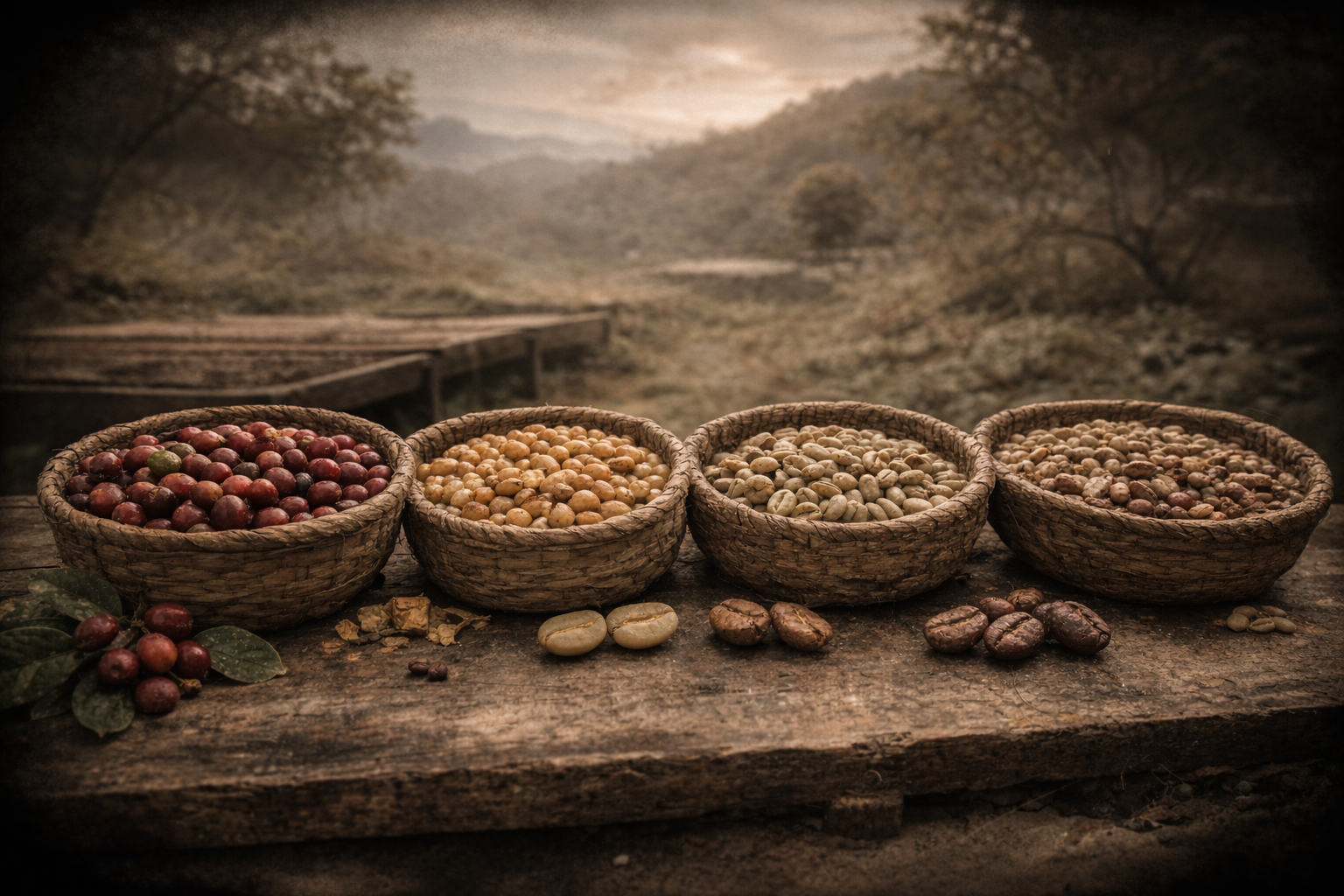
Geography That Creates Natural Advantage
Processing doesn’t erase terroir. It amplifies or masks it.
Example:
-
Washed Colombian coffee → clarity, balance, precision.
-
Natural Colombian coffee → deeper fruit, more sweetness, softer acidity.
-
Washed Ethiopian → floral and bright.
-
Natural Ethiopian → explosive fruit.
Processing is the volume knob. Origin is the instrument.

What Should Home Roasters Choose?
If you’re starting:
-
Begin with washed. Learn structure.
-
Move to honey when you want complexity.
-
Try naturals once you understand heat control.
If you’re building a menu:
-
Washed for everyday drinkers.
-
Honey for balance seekers.
-
Natural for adventurous profiles.
Explore our current green coffee lots sorted by processing method.
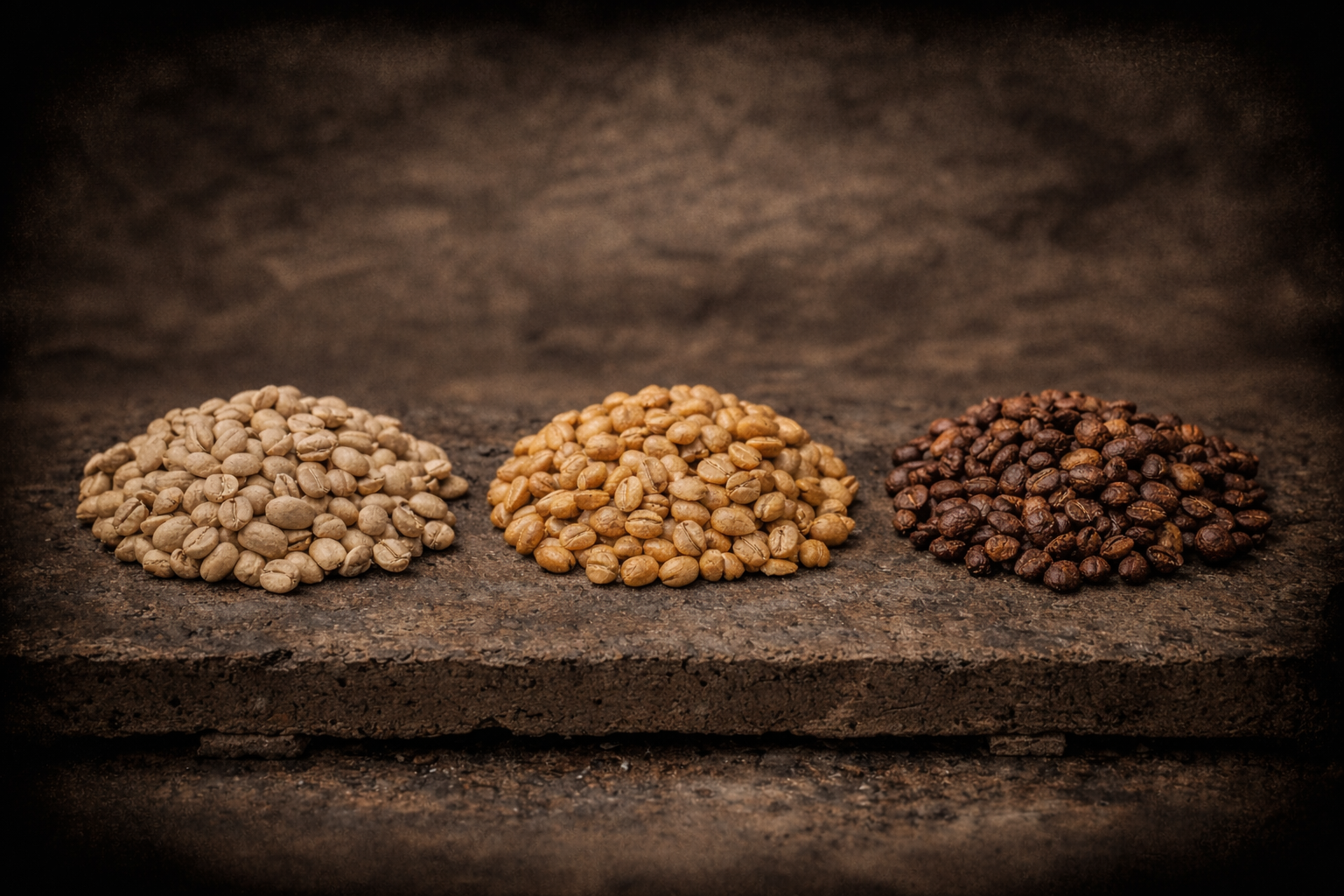
Common Mistakes When Choosing by Process
-
Buying natural expecting clarity.
-
Buying washed expecting fruit bombs.
-
Ignoring density differences.
-
Roasting all processes with the same curve.
Processing changes thermal behavior.
Adjust accordingly.
FAQ – Coffee Processing Methods
The Quiet Truth About Processing
Processing is not a trend.
It’s a decision made at origin that shapes everything after.
You can’t roast your way out of bad processing.
But you can elevate good processing with restraint.
If you understand this, you’re already ahead.
Choose processing with intention.
Don’t chase flavor descriptors.
Chase structure.
Browse our green coffees by processing method and roast with clarity.